Valentine's Day Wallpapers 2016


Modifying your car to add an individual element has been popular for many years now but if it costs you up to double on your insurance as a result is it time to reconsider?
A recent study based on over 2 million cases has strongly shown the vehicles that had received after market aesthetics or modifications such as exhaust systems, alloy wheels, spoilers and body kits paid a much larger premium.
This has led in the past to a large number of people not declaring their modifications: if you are one of these people then be aware, with most policies this will invalidate your cover, potentially leaving you and other road users at risk.
A custom paint job isn't a modification though so shouldn't make a difference right? Wrong: this study reports increases of up to 36 per cent to your insurance premium – even go-faster stripes & numbered decals have increased yearly insurance costs by up to 22 per cent.
An unbelievable 100 per cent premium increase has been seen during this study for those customers adding larger more intricate custom alloy wheels to their cars, these were extreme cases where the alloy wheels had increased width or sometimes wheel spacers.
Not all modifications are bad though and some have shown an decrease in premiums such as parking sensors which can reduce premiums by up to 13 per cent and tow bars by 20 per cent as insurance companies will assume you are driving slower as a result.
Car phones, turbo engines, sat-navs and spoilers are just some of the items that insurance companies flag up as danger areas – turbos and spoilers tend to mean faster cars and more chances of accidents, and car phones and sat-navs can be an advert for opportunistic theft.
Window tints appeared on the chart of modifications that increased premiums, but the average increase was one per cent so nothing to worry about there!
The main thing to take from all this is that if you want to modify your car then expect a larger insurance bill or maybe check with your insurers first, secondly make sure you inform your insurance company so as not to invalidate your insurance completely.

Louisiana has the fourth costliest car insurance rates in the county, according to a new study by website Insure.com.

Facts

20 Best Insurance Companies

Insure.com scores carriers based on a survey of customer service, claims processing, value and other criteria.

1 - AAA Insurance 90.4

2 - USAA 87.5

3 - State Farm 87.2

4 - Erie Insurance 87.1

5 - (tie) Progressive 86.2

The Hartford 86.2

7 - The General 85.9

8 - Geico 85.7

9 - Nationwide 84.5

10 - MetLife 84.3

11 - Allstate 82.6

12 - Liberty Mutual 82.1

13 - Titan Insurance 82

14 - Farmers Insurance 81.4

15 - American Family 80.7

16 (tie) - Mercury 79.6

einsurance 79.6

18 - Travelers 78.7

19 - 21st Century 78.1

20 - Auto Club of S. California 77.9
On average, residents in the state are paying $1,842 a year for car insurance, compared to the $1,325 national average and $807 in the lowest-cost state of Maine.
“From what we’ve found, it appears Louisiana’s high car insurance rates stem in part from Louisiana’s litigious population, frequent natural disasters and high rate of uninsured motorists,” said Penny Gusner, Insure.com consumer analyst.
Louisiana residents are more eager to file claims than residents of other states, Gusner said.
If insurers have to pay out bigger settlements, they pass on the costs to all motorists.
Gusner said hurricanes, floodwater, tornadoes and hail result in many comprehensive claims, and insurers recoup their losses by raising future rates.
The uninsured rate in Louisiana is 13.9 percent, she said.
“Maine, our cheapest state, has a rate of uninsured drivers of only 4.7 percent,” she added. “When many drivers are uninsured, the drivers that are insured take on the burden of paying more for insurance since there are less drivers for the risk to be spread around.”
Louisiana’s minimum liability requirements aren’t abnormal, Gusner said.

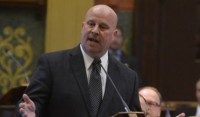
The Republican leaders in the Michigan House and Senate are slow to jump on board with a plan to do away with a tax credit auto insurance companies have received the last two years. Representative Al Pscholka is heading up the effort to ditch the $80 million tax credit, calling it “the biggest piece of corportate welfare I’ve seen in a long time.” The Stevensville Republican adds, “this is an $80 million handout of General Fund money.”
House Speaker Kevin Cotter isn’t seeing things Pscholka’s way just yet. He calls it a “big issue,” and says he needs to understand why the credit was passed in the first place. Cotter adds “there’s no reason to act right now.” Senate Majority Leader Arlan Meekhof isn’t opposed to Pscholka’s call to repeal the credit, but says he’s “not interested in going back” and making the cut retroactive.
Pscholka is undaunted by the pushback from leadership and contends the tax credit was flawed. “There was no rebate, there was no rollback of rates,” he said. “I keep looking in my mailbox, and I can’t find it. I’ve asked about it. They told me ‘Oh gee, representative, maybe your rates won’t go up higher, later.'”
He wants the money saved to go towards getting Detroit Public Schools out of debt. Car insurance companies say they’ll have to raise rates if the state gets rid of the tax credit. Pscholka contends the tax credit was an accident and insurance companies failed to pass the savings to their customers.
Được tạo bởi Blogger.
Hide
X